Abiotic Disorders
Damage from weather, nutrients, sprays and other non-living causes.
15 entries
 Abiotic Disorders
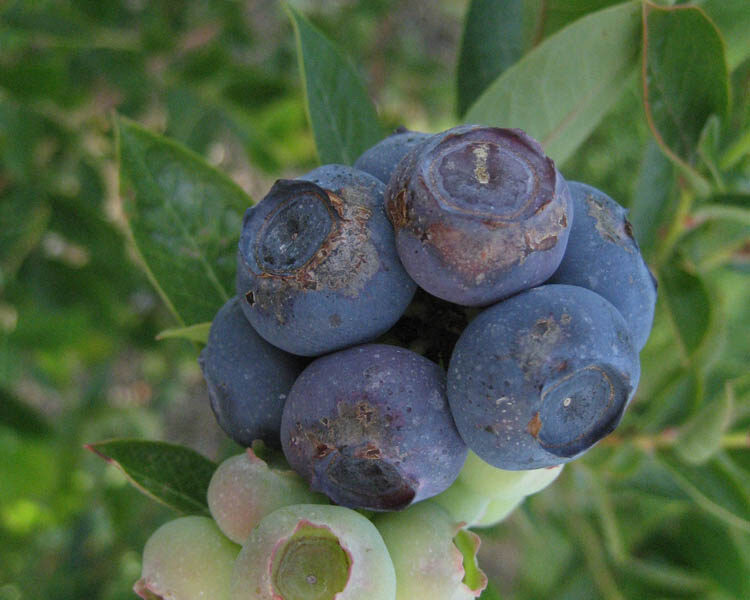
Contact Spray Injury
Berries may have rough textured, brown scar lines on the surface (russetting). Damage may be caused by various pesticide, fertilizer and/or adjuvant sprays.
Identify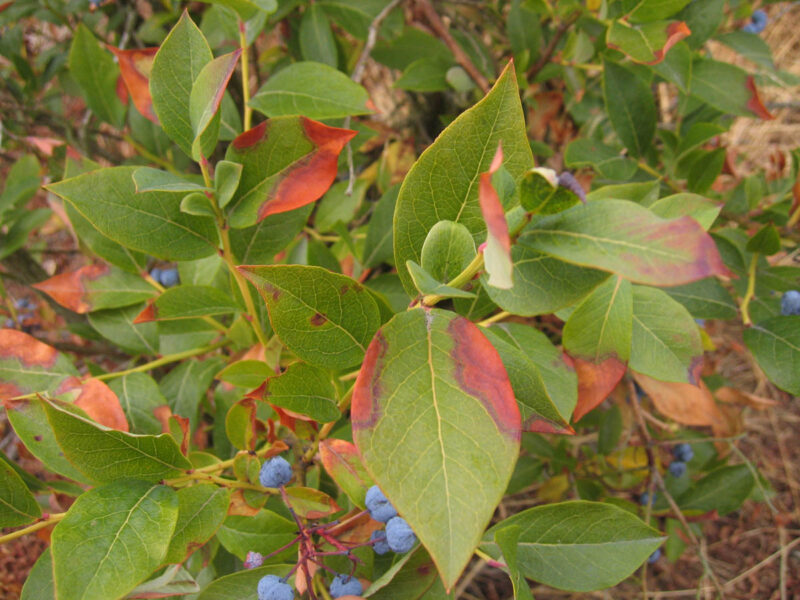 Abiotic Disorders
Drought Injury
Leaf margins turn brown and dry following hot weather and inadequate irrigation.
Identify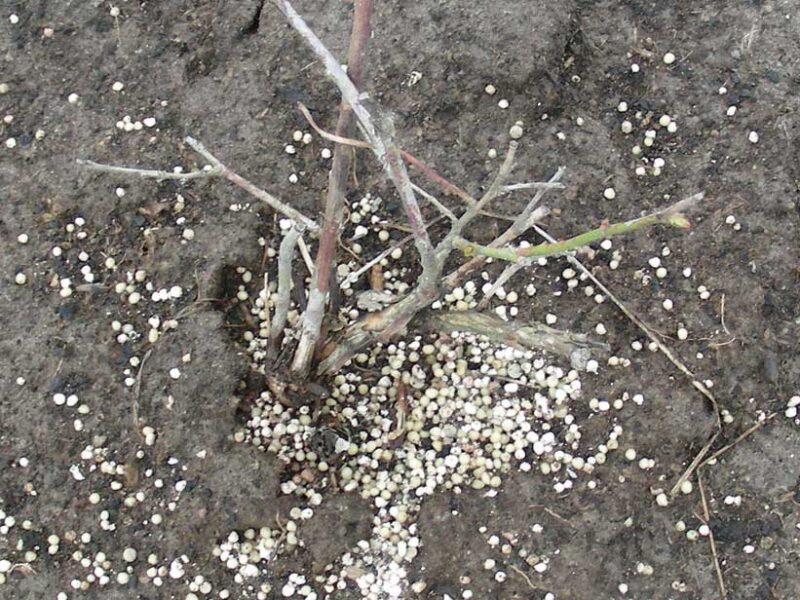 Abiotic Disorders
Fertilizer burn
Leaf margins turn brown and dry. Plants may be killed. Young plants are most at risk from excess fertilizer placed too close to the crown.
Identify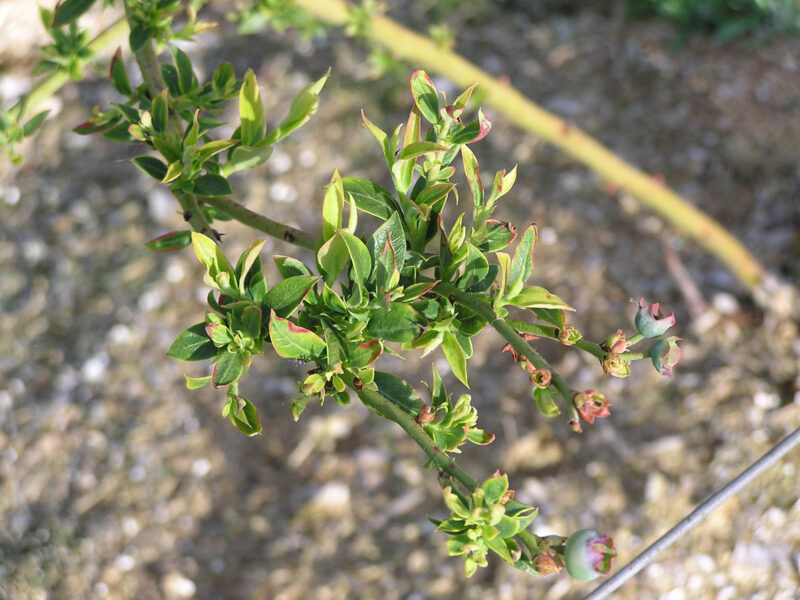 Abiotic Disorders
Glyphosate (Roundup) Injury
Young leaves become small, strap-like, deformed and yellow. Damage is most severe in the spring following exposure to glyphosate spray the previous fall.
Identify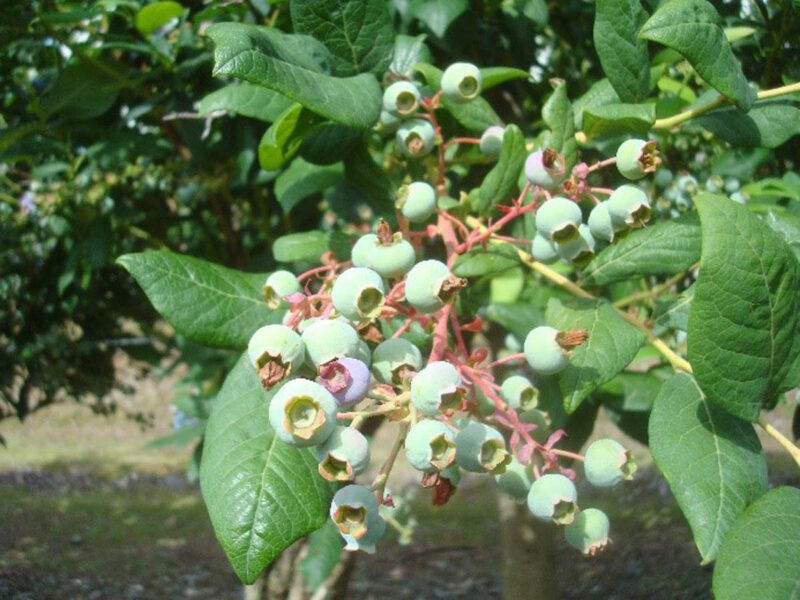 Abiotic Disorders
Green Fruit Drop (GFD)
Extensive GFD has only been observed in ‘Draper’ and is related to insufficient allocation of calcium under the Fraser Valley’s climatic conditions. Fruit sets and develops normally until…
Identify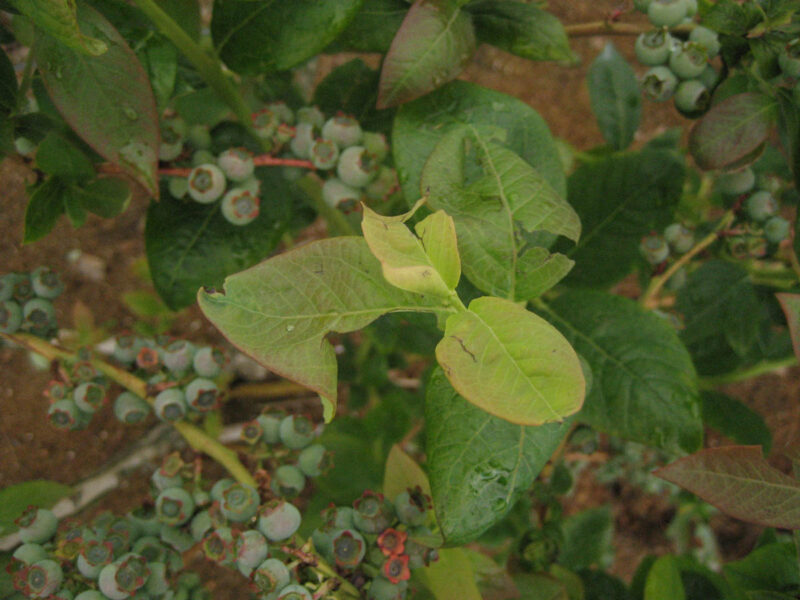 Abiotic Disorders
Hail Damage
Leaves are shredded. Flowers may fall off prior to pollination. Berries have small, indented, brown scars that remain visible as the berries ripen.
Identify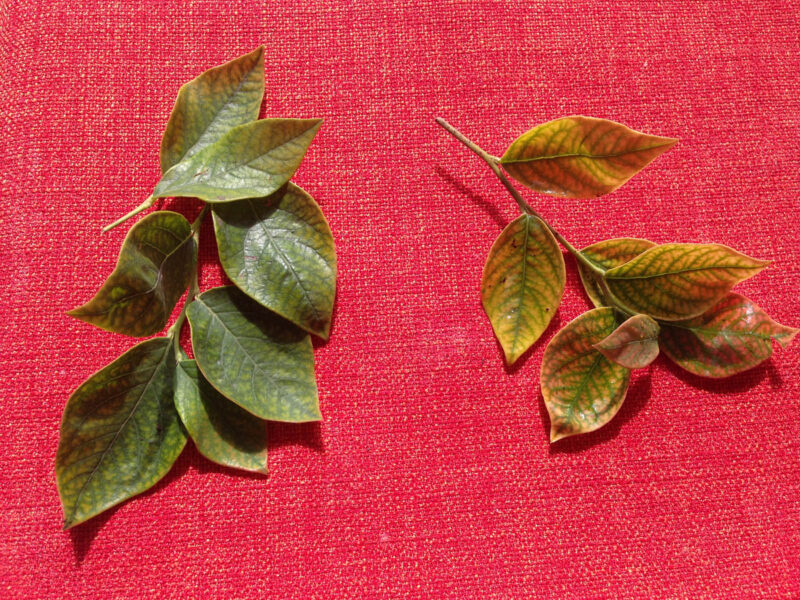 Abiotic Disorders
Iron Chlorosis
Growth is stunted. Leaves, starting from the shoot tips, are small and yellow with green veins. Condition occurs when the soil pH is above 5.5, causing iron to…
Identify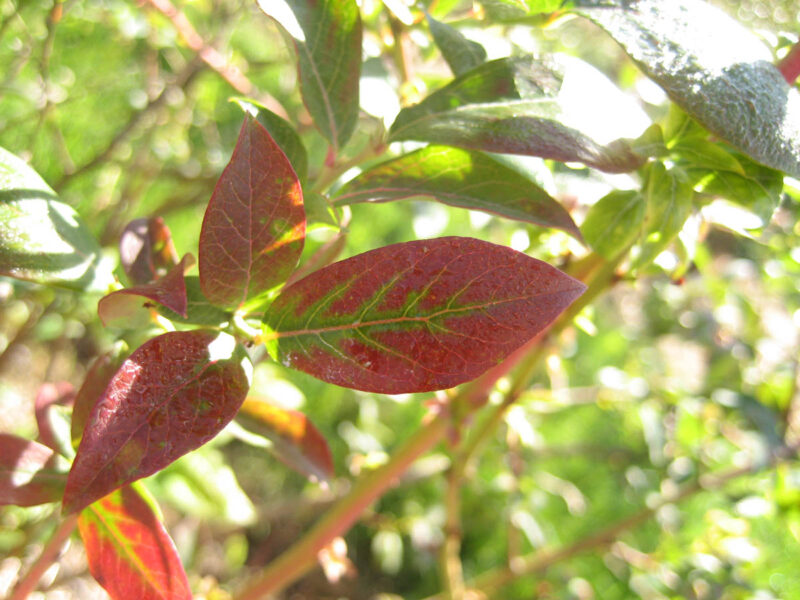 Abiotic Disorders
Magnesium Deficiency
Older leaves turn red between the veins. Leaf centres remain dark green along the veins resulting in a “Christmas tree” pattern on the leaves.
Identify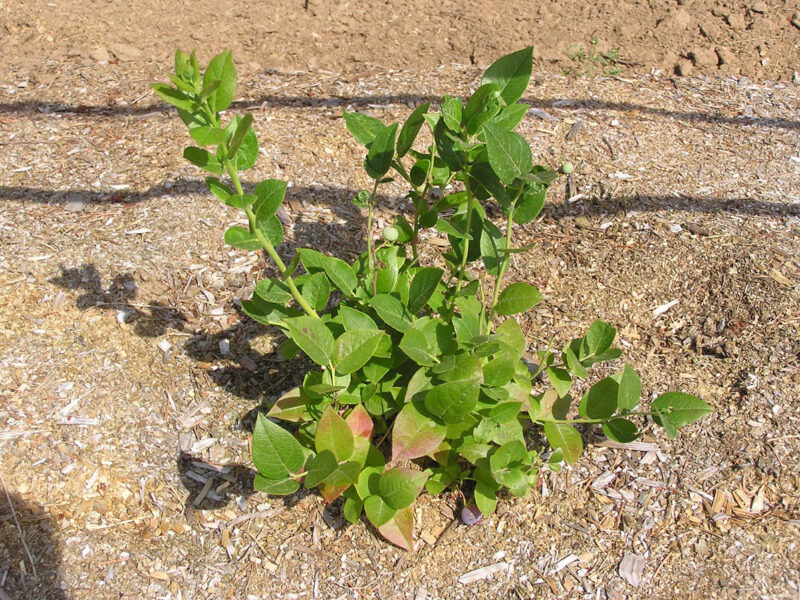 Abiotic Disorders
Nitrogen Deficiency
Growth is stunted. Leaves are a uniform pale green and may turn red prematurely in late August. Condition is often seen on young plants where sawdust mulch has…
Identify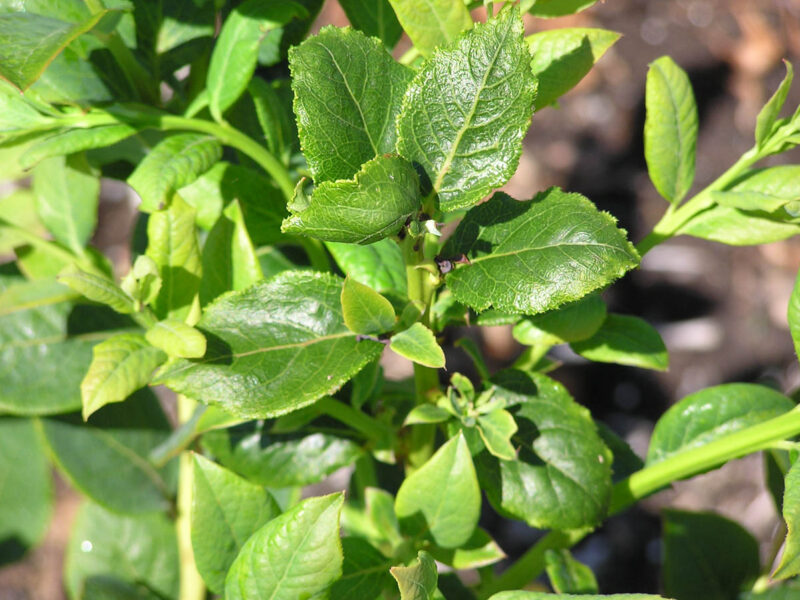 Abiotic Disorders
Phenoxy (2, 4-D, MCPA)
Herbicide-injured leaves may be twisted and distorted, with serrated margins.
Identify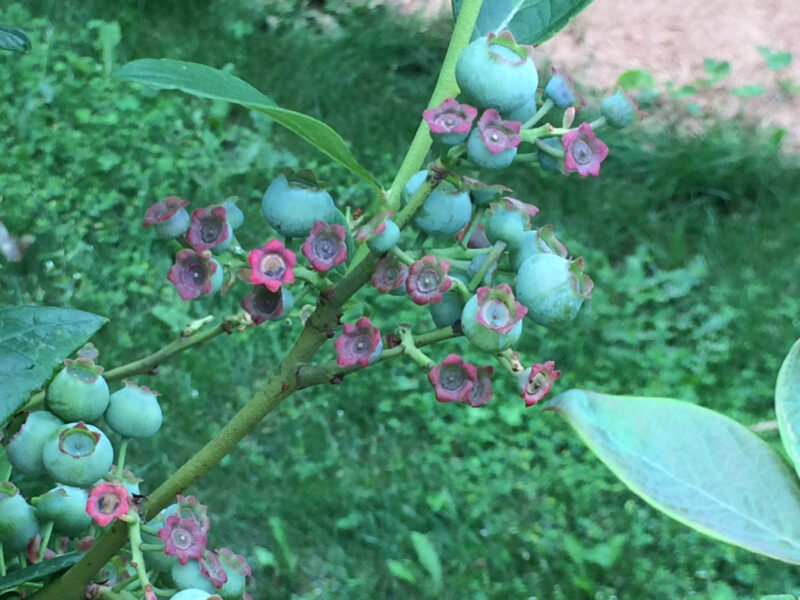 Abiotic Disorders
Poor Pollination
Berry size is uneven. At petal fall, poorly pollinated berries are small, flat and reddish in colour. Fruit may drop shortly after bloom. Poor pollination occurs when there…
Identify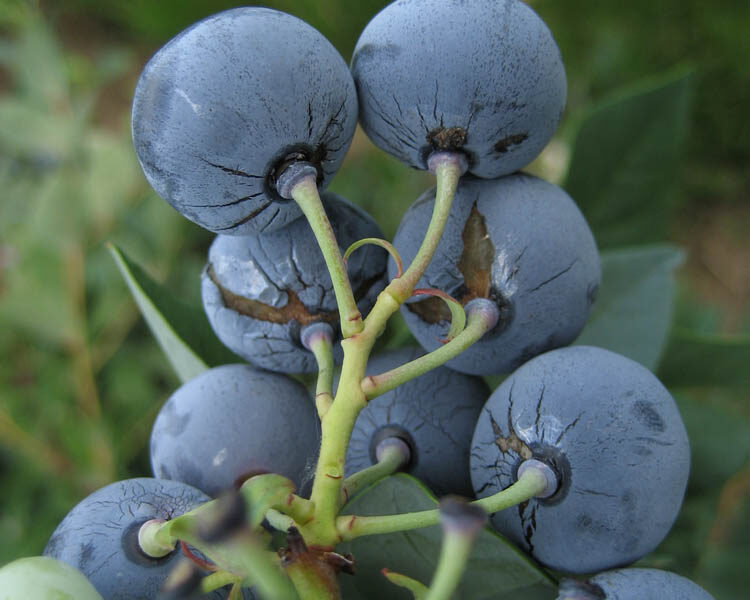 Abiotic Disorders
Rain Splitting
Berries swell and the skin cracks, exposing the green flesh of the berry. Split berries can quickly become infected with fruit rot. Splitting occurs when heavy rains occur…
Identify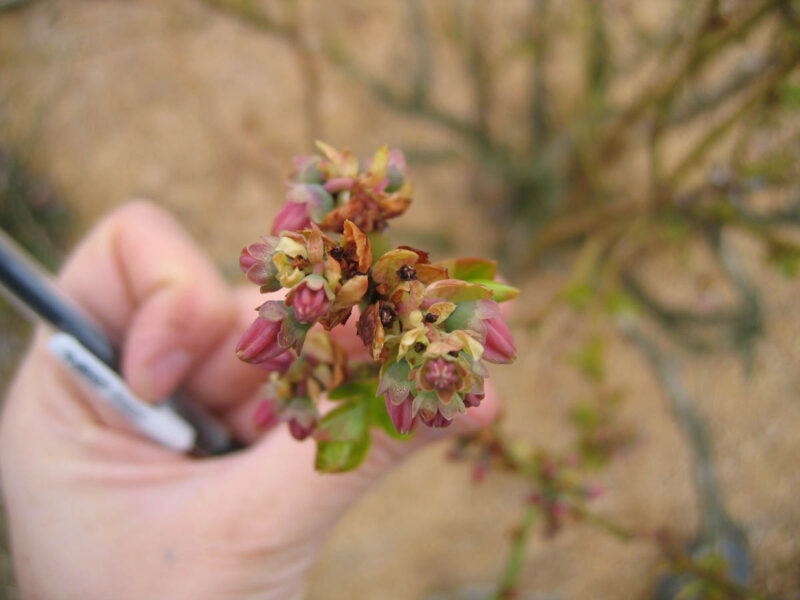 Abiotic Disorders
Spring Frost Injury
Developing shoots and flower clusters suddenly wilt, turn brown and die. Frost damage may affect individual pink tip buds in a cluster or just the centre leaf in…
Identify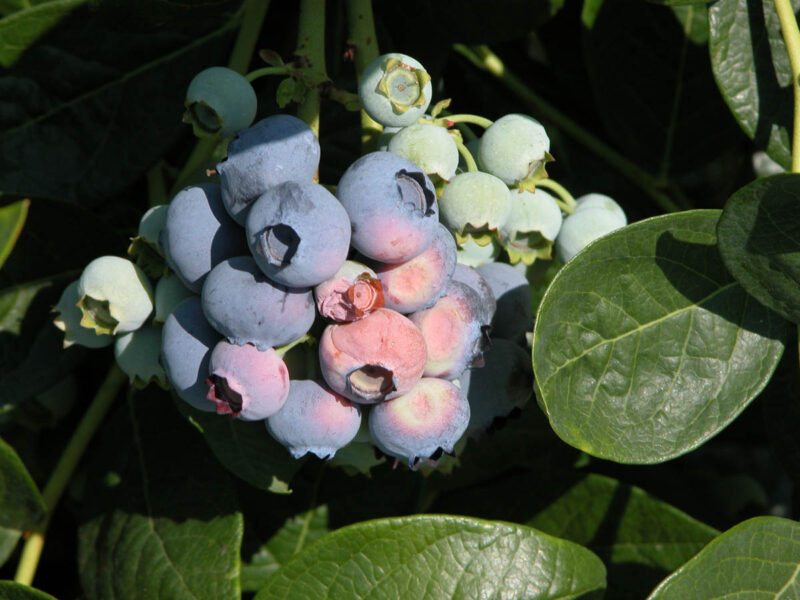 Abiotic Disorders
Sun-scald
Berries develop a pinkish-grey soft, sunken patch on the side exposed to the sun, usually the south side. Damage occurs after a period of extreme summer heat.
Identify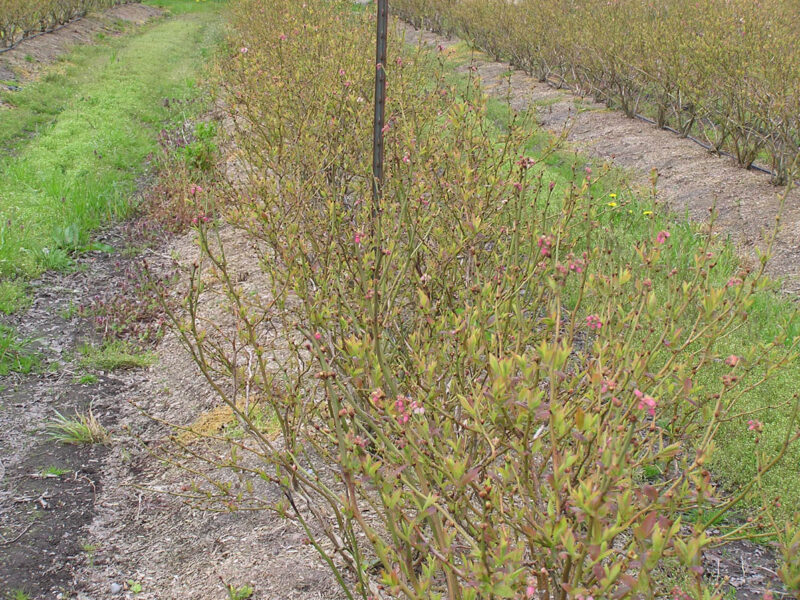 Abiotic Disorders
Winter Damage
Individual flower and leaf buds turn brown and fail to develop. One year-old branches may be killed from the tips back. Extreme cold in late fall/winter occurs before…
IdentifyNothing in this section matches that. Try the full guide search instead.