
Green and Brown Lacewings
Chrysopidae and Hemerobiidae
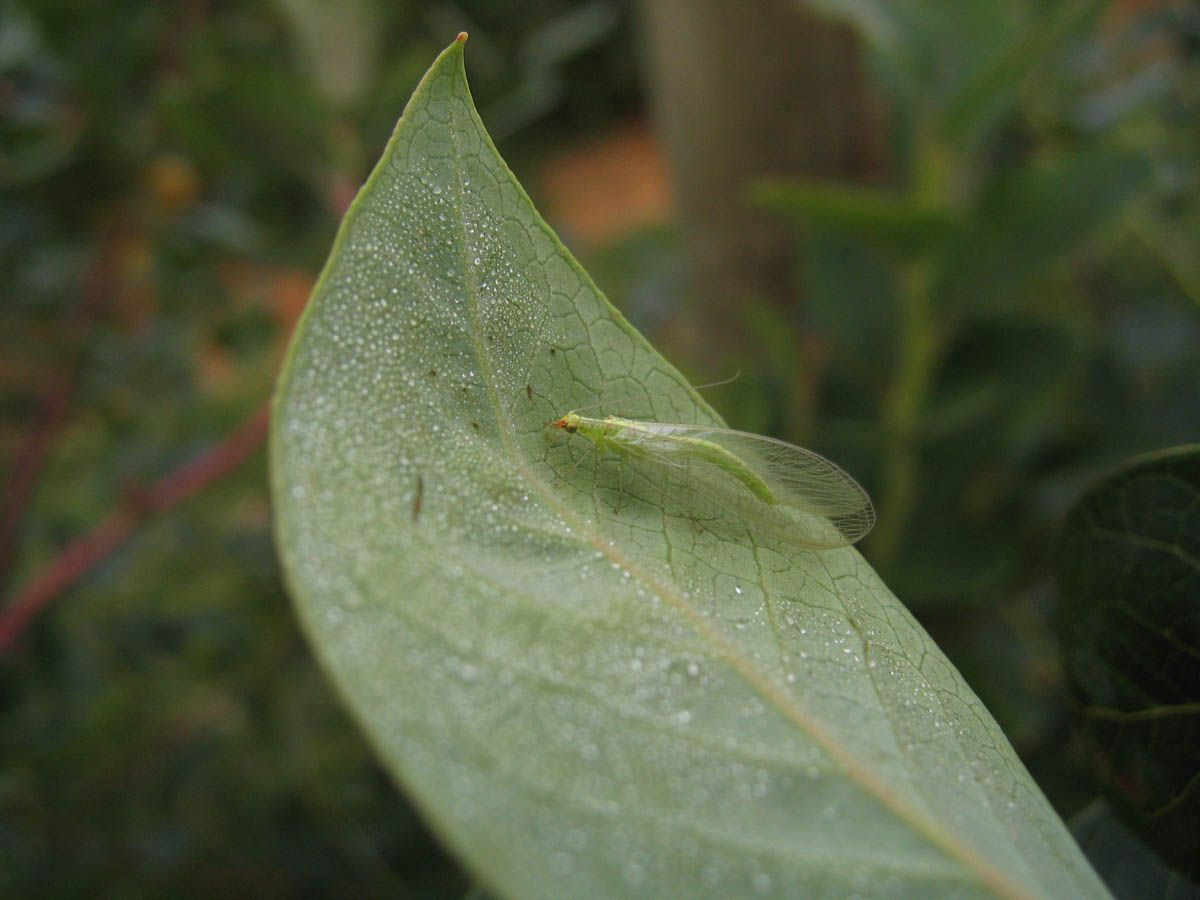
Insect
Adults are 10-20 mm long, pale green or brown, with a slender body and lacy, transparent wings. Eggs are pale green or white, 1 mm long and laid individually at the end of a 2-5 mm long slender stalk. Larvae are 6-10 mm long, slender, brown and white with significant ‘pincers’ protruding from their heads. Larvae can consume 20 to 200 aphids per day. Aphids are preferred, but lacewings will also feed on spider mites, leafhoppers, thrips, psyllids and small caterpillars. At least three species contribute to biocontrol in berry crops in BC: two green lacewings and one brown lacewing. The brown lacewing is smaller in size and is less common in blueberries than green lacewings. Lacewings overwinter as pupae or adults depending on the species.
Role
Biological control of aphids, mites and other soft-bodied insects.
Photo reference
3 field photos
Select any photo to enlarge.