
Mummy Berry
Monilinia vaccinii-corymbosi
Symptoms
Individual leaf and flower clusters turn brown and droop. A bluish-grey fuzz is visible on the petiole or flower stem. Infected berries become pink and puckered, then turn hard, white, and shrivelled and drop to the ground late in the season.
Disease cycle
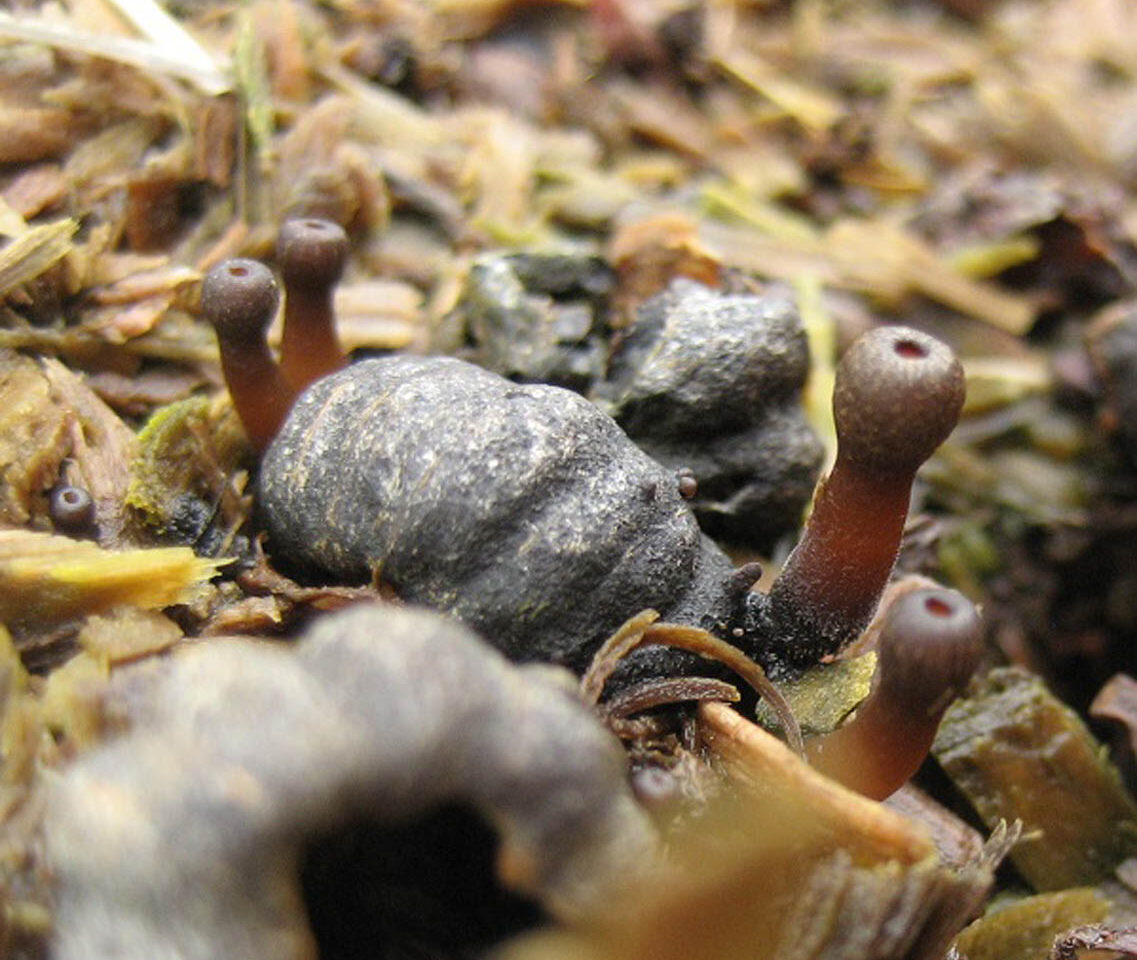
This fungus over- winters in infected berries (mummy berries) that fell to the ground the previous season. Primary infection occurs when spores (ascospores) are released from the sprouting apothecia (fruiting structures of the pathogen) from mummy berries in early spring and blown onto new flower and leaf buds. Secondary infection occurs when bees carry the secondary spores (conidia) from primary infections to open blossoms.
Photo reference
13 field photos
Select any photo to enlarge.