Sooty Blotch
Sooty Blotch
Unidentified causal agent
Damage: Grey to black blotches form on the surface of green stems and twigs, giving them a sooty appearance.
Disease cycle: The organism grows below the cuticle on plant surfaces. It does not appear to harm the plant.
 Sooty BlotchCarolyn Teasdale, ES Cropconsult
Spotted Wing Drosophila (SWD)
Spotted Wing Drosophila SWD
(Drosophila suzukii)
Damage: Female flies lay eggs in ripening fruit. Larvae feed within the fruit, turning the flesh brown, soft, and leaky. Damage can provide an entry site for infection by secondary diseases. This injury results in unmarketable fruit and economic loss.
Insect: SWD look similar to other vinegar flies. Adult flies are 2-3 mm in length, with red eyes, tan-colored body with darker bands on abdomen. Males have characteristic single spots on each of its wings along the 1st vein and two dark combs on their front legs. Females lack wing spots and leg combs, but are distinguished by a robust, saw-toothed ovipositor (visible under magnification). Larvae are white, and legless, as are all Drosophila larvae.
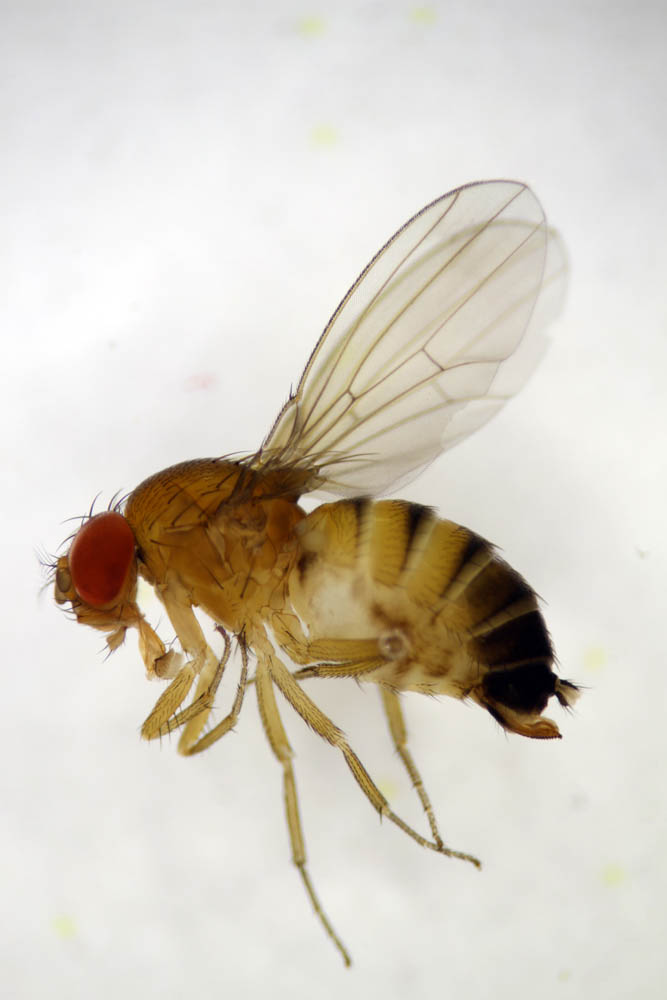 SWD FemaleSheila Fitzpatrick
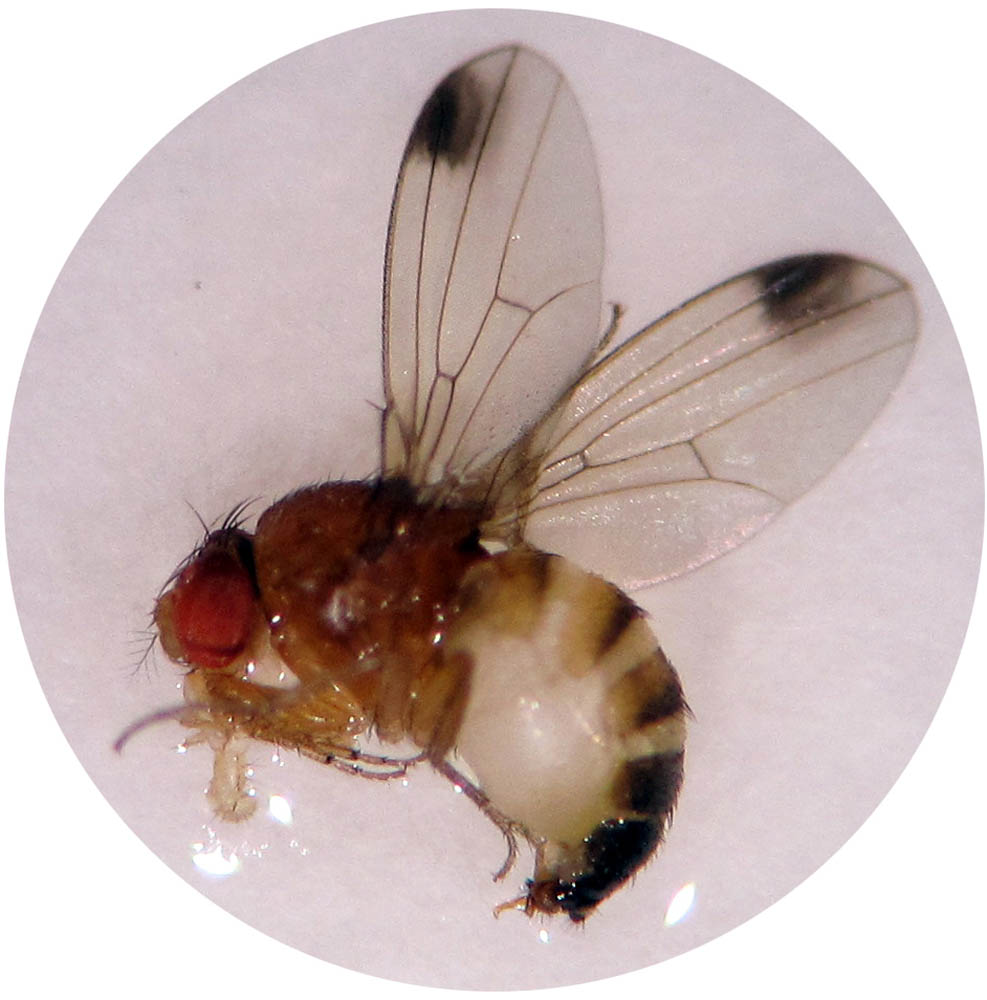 SWD MaleSheila Fitzpatrick
 SWD On BlueberryCarolyn Teasdale, ES Cropconsult
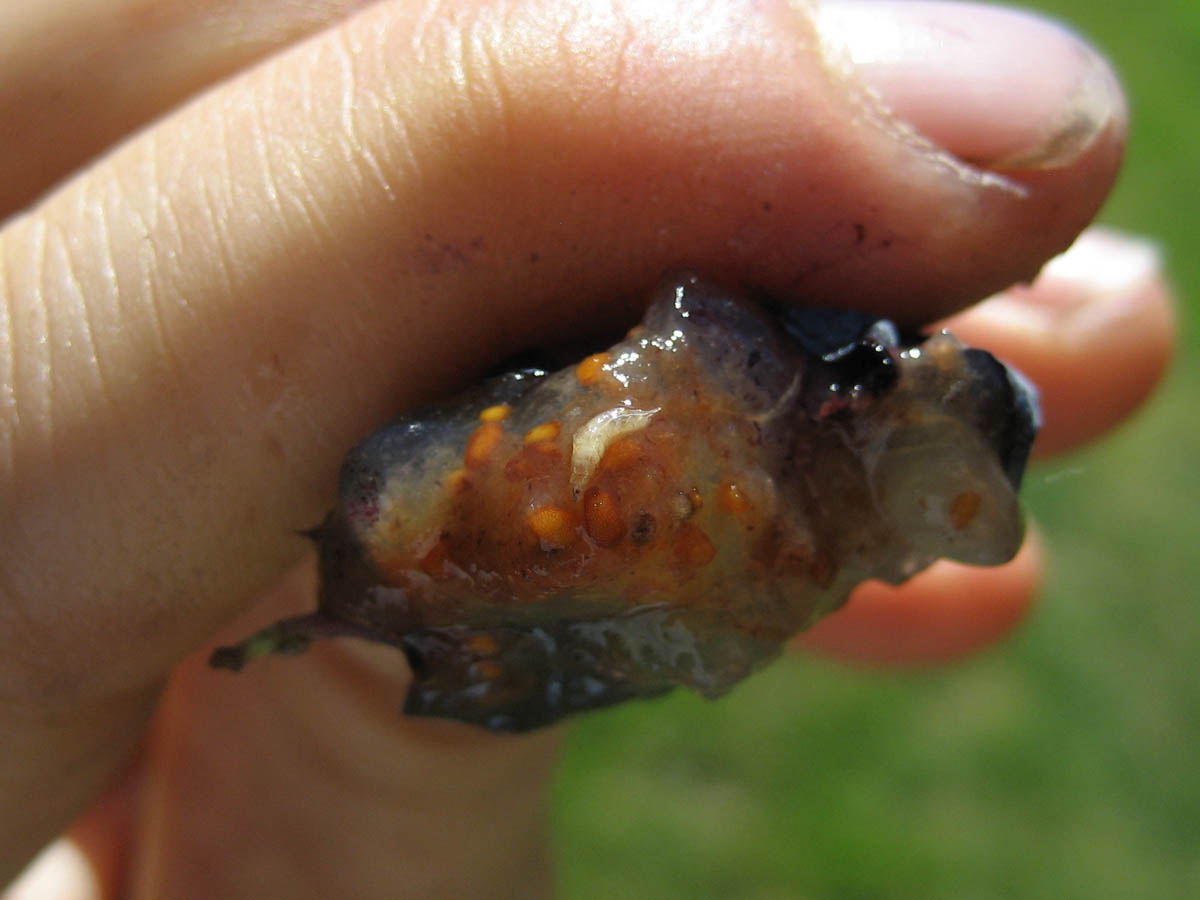 SWD Larva on BlueberryCarolyn Teasdale, ES Cropconsult
 SWD Larva on BlueberryCarolyn Teasdale, ES Cropconsult
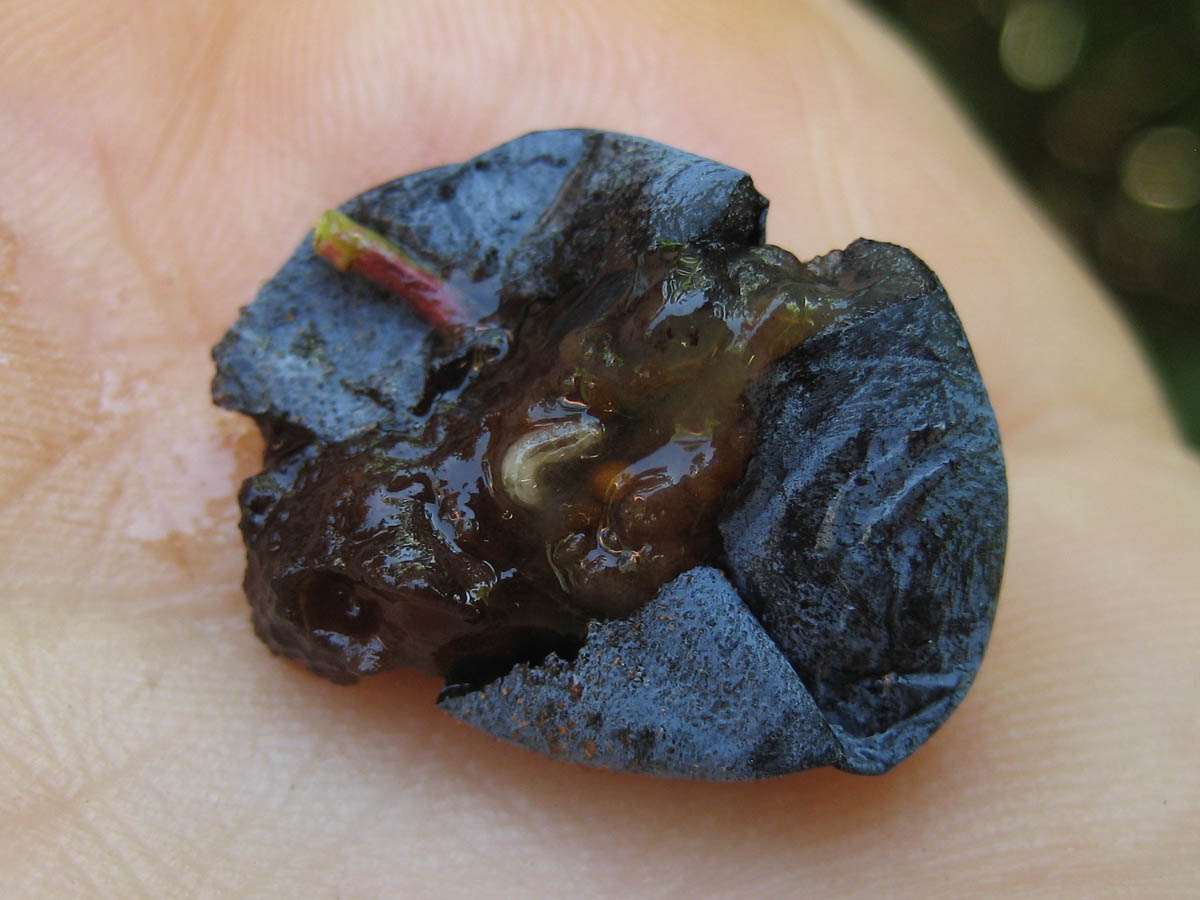 SWD Larva on BlueberryCarolyn Teasdale, ES Cropconsult
 SWD Larva on BlueberryCarolyn Teasdale, ES Cropconsult
 SWD Damaged BlueberryCarolyn Teasdale, ES Cropconsult
 SWD Damaged BlueberryCarolyn Teasdale, ES Cropconsult
 SWD Blueberry DamageCarolyn Teasdale, ES Cropconsult
Tentiform Leafminers
Tentiform Leafminer
(Phyllonorycter spp.)
Damage: Leafminer larvae create transparent blotches or serpentine line patterns on the underside of leaves. The leaf surface appears bubbled. Leafminers are rarely seen in blueberry fields.
Insect: Pale yellow caterpillars feed and tunnel between the layers of the leaf. Leafminer damage can occur throughout the summer.
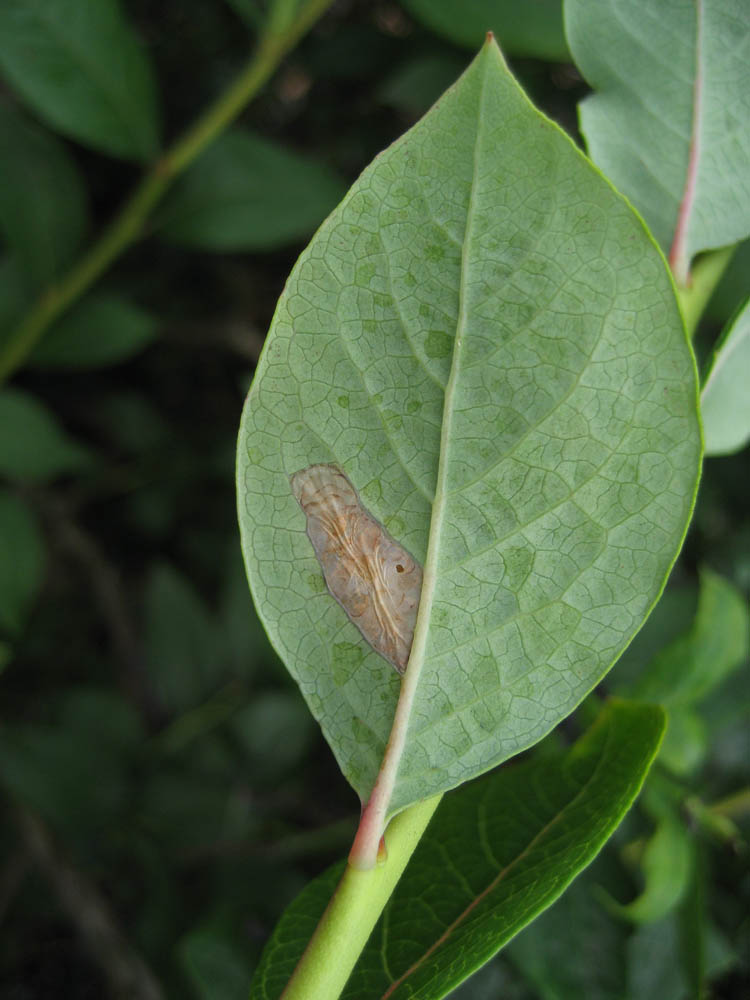 Tentiform LeafminerCarolyn Teasdale, ES Cropconsult
 Tentiform LeafminerCarolyn Teasdale, ES Cropconsult
Vertebrate Pests
Bird Damage
(European Starlings, American Robin, Cedar Waxwing, Crows and other)
Birds (European Starlings, American Robin, Cedar Waxwing, Crows and Others)
Damage: Berries have wedge- shaped punctures with sections of internal flesh missing.
 Bird DamageMark Sweeney
 Bird DamageCarolyn Teasdale, ES Cropconsult
 Bird DamageCarolyn Teasdale, ES Cropconsult
Vole Damage
(Microtus townsendii)
Voles (Field Mice)
Damage: Voles feed on roots and crowns. Bushes are weakened and may appear stressed for water or nutrients. Young plants may die. Holes and tunnels in the soil within the row are the most visible sign of rodent activity.
Pest: Voles are rarely seen. They are dark brown, have short legs, a short tail, a rounded head and small ears and eyes.
 Townsends VoleDoug Ransome, BCIT
 Townsends VoleDoug Ransome, BCIT
 Vole Runways and HolesDoug Ransome, BCIT
 Vole RunwaysDoug Ransome, BCIT
 Vole HoleDoug Ransome, BCIT
 Vole HoleDoug Ransome, BCIT
 Vole HoleDoug Ransome, BCIT
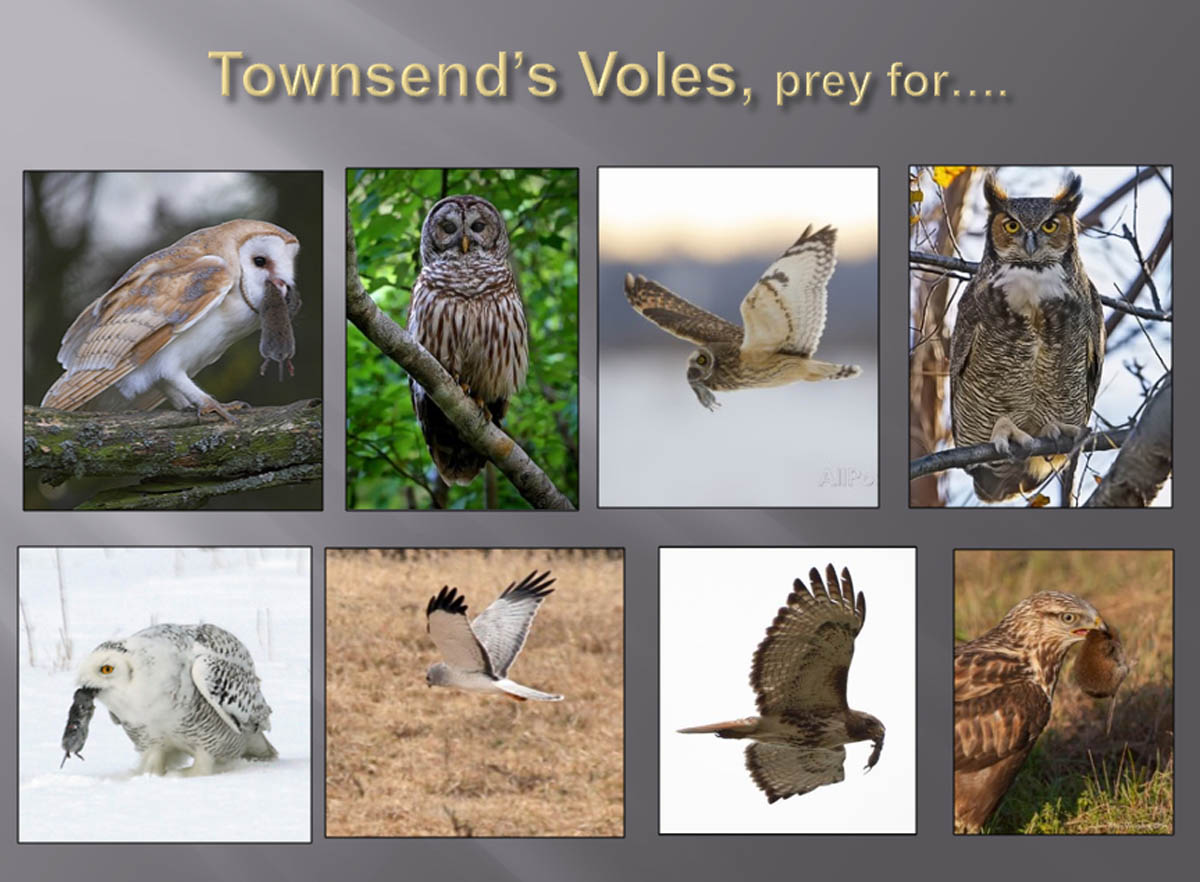 Vole DamageDoug Ransome, BCIT
 Vole DamageDoug Ransome, BCIT
 Vole GrindingDoug Ransome, BCIT
 Vole Tunnel In RootsDoug Ransome, BCIT
Virus Not In BC
Blueberry Leaf Mottle
(Blueberry leaf mottle virus – BLMV)
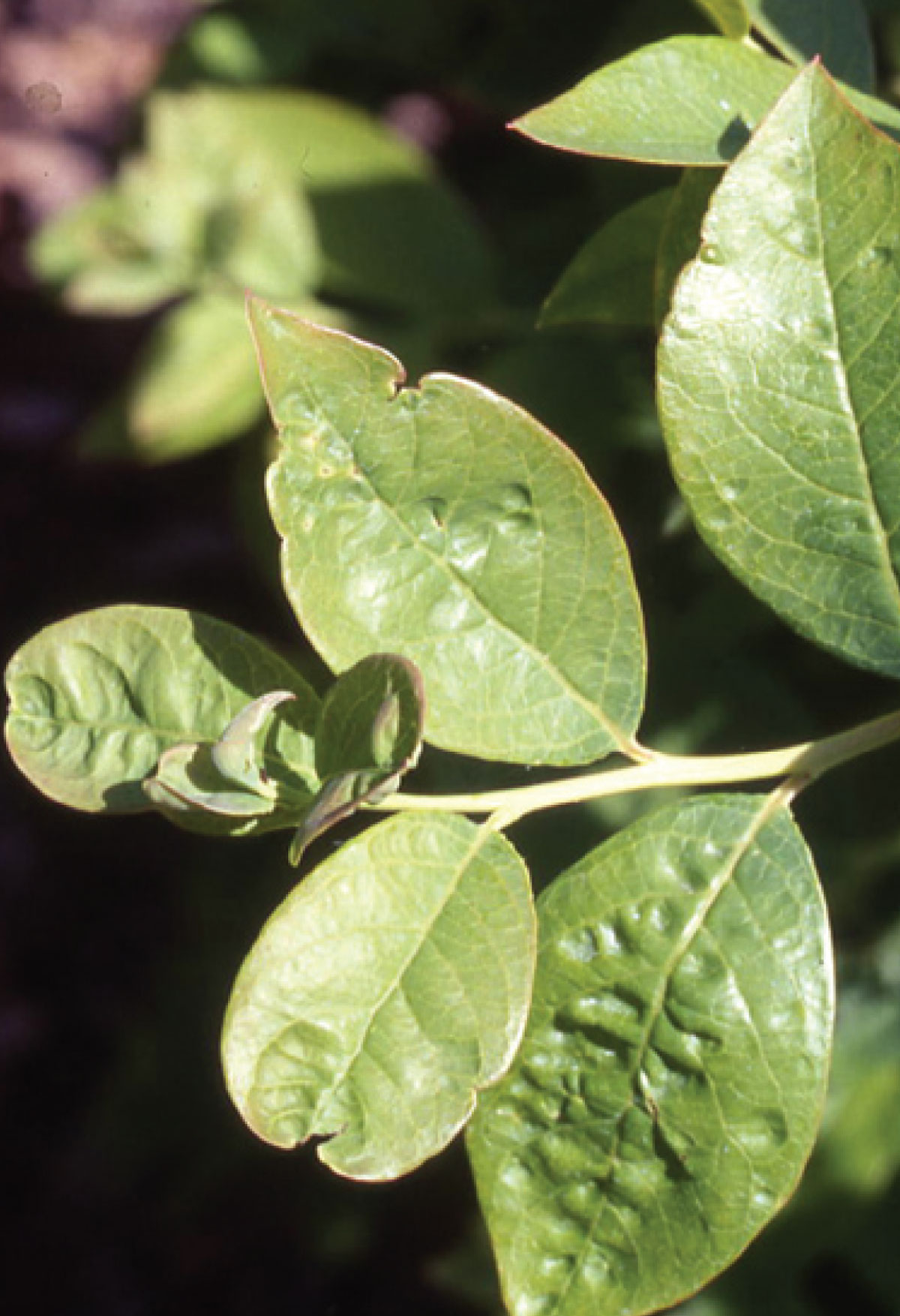
Damage: Leaves are mottled and may be malformed or strap-like. The top of bushes die back with weak regrowth occurring only at the crown.
Disease: BLMV is spread by pollen and carried by bees. It is present in Michigan.
Blueberry Red Ringspot
(Blueberry red ringspot virus – BRRV)
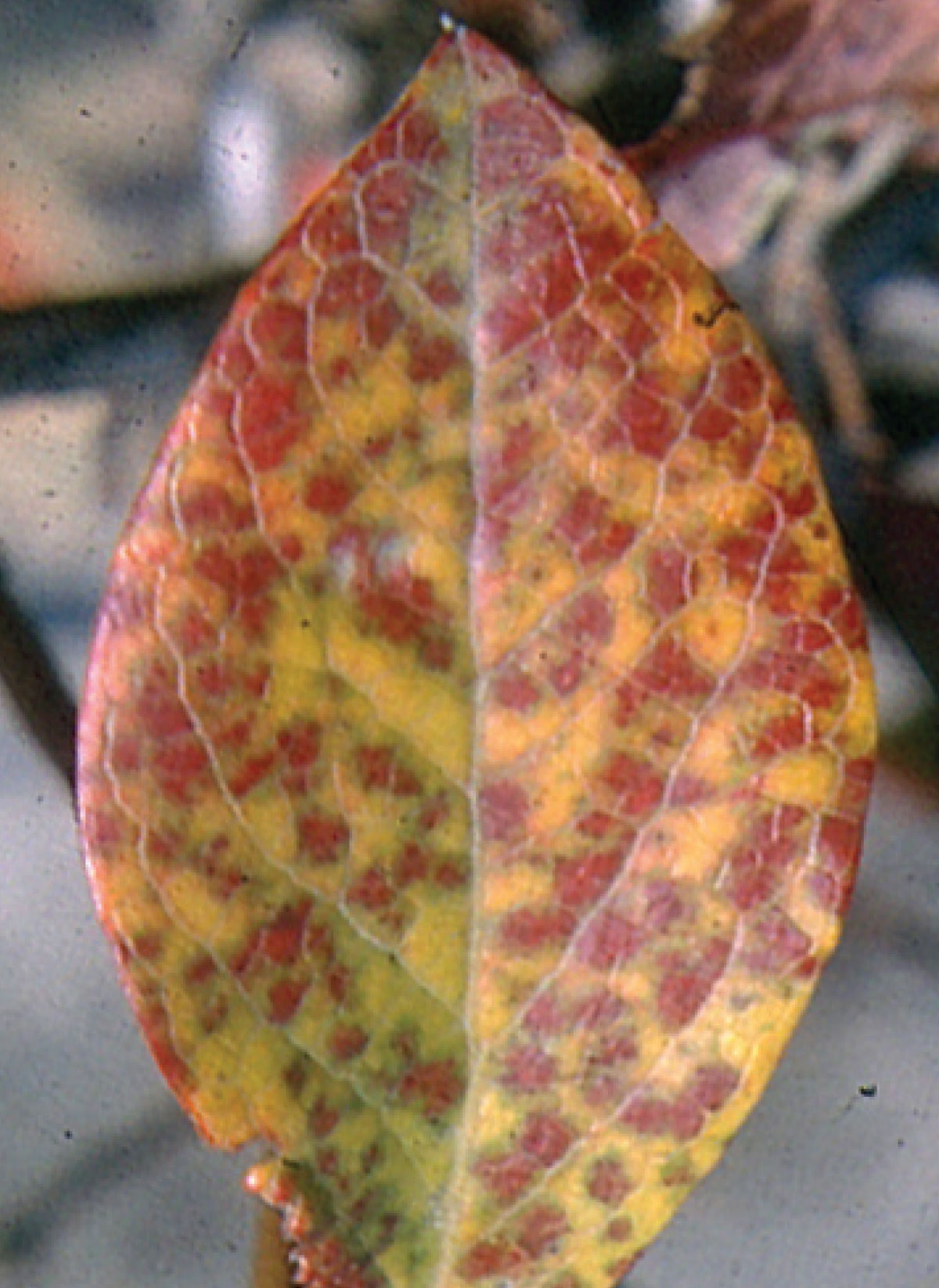
Damage: Circular red rings or blotches, 4-6 mm in diameter, develop on one-year-old and older stems. Older leaves develop reddish brown circular spots, 3-5 mm in diameter, in mid to late summer.
Disease: The disease is caused by BRRV and it is not known how it spreads. It is present at low incidence in Oregon and the Eastern US. ‘Bluecrop’ is resistant to this disease.
Blueberry Shoestring
(Blueberry shoestring virus – BSSV)
Damage: New and one-year-old stems show red streaks, 3-20 mm long, more on the side of the stem exposed to the sun. Leaves are elongated and strap-like (shoestring appearance), and may be reddish in colour. Blossoms have reddish streaks. Berries are reddish purple instead of blue. Yield is reduced.
Disease: BSSV is spread by the blueberry aphid, Illinoia pepperii, which is not present in BC. The virus has a latency period of 4 years before infected bushes show symptoms.

Blueberry Stunt
Damage: Bushes are severely stunted and bushy. Leaves may be spoon-shaped or cupped downward with chlorotic margins and chlorosis between the veins. Chlorotic areas turn bright red in late summer. Yield is reduced.
Disease: This disease is caused by a phytoplasma and is spread by leafhoppers. It is present in Eastern Canada and the Eastern US.
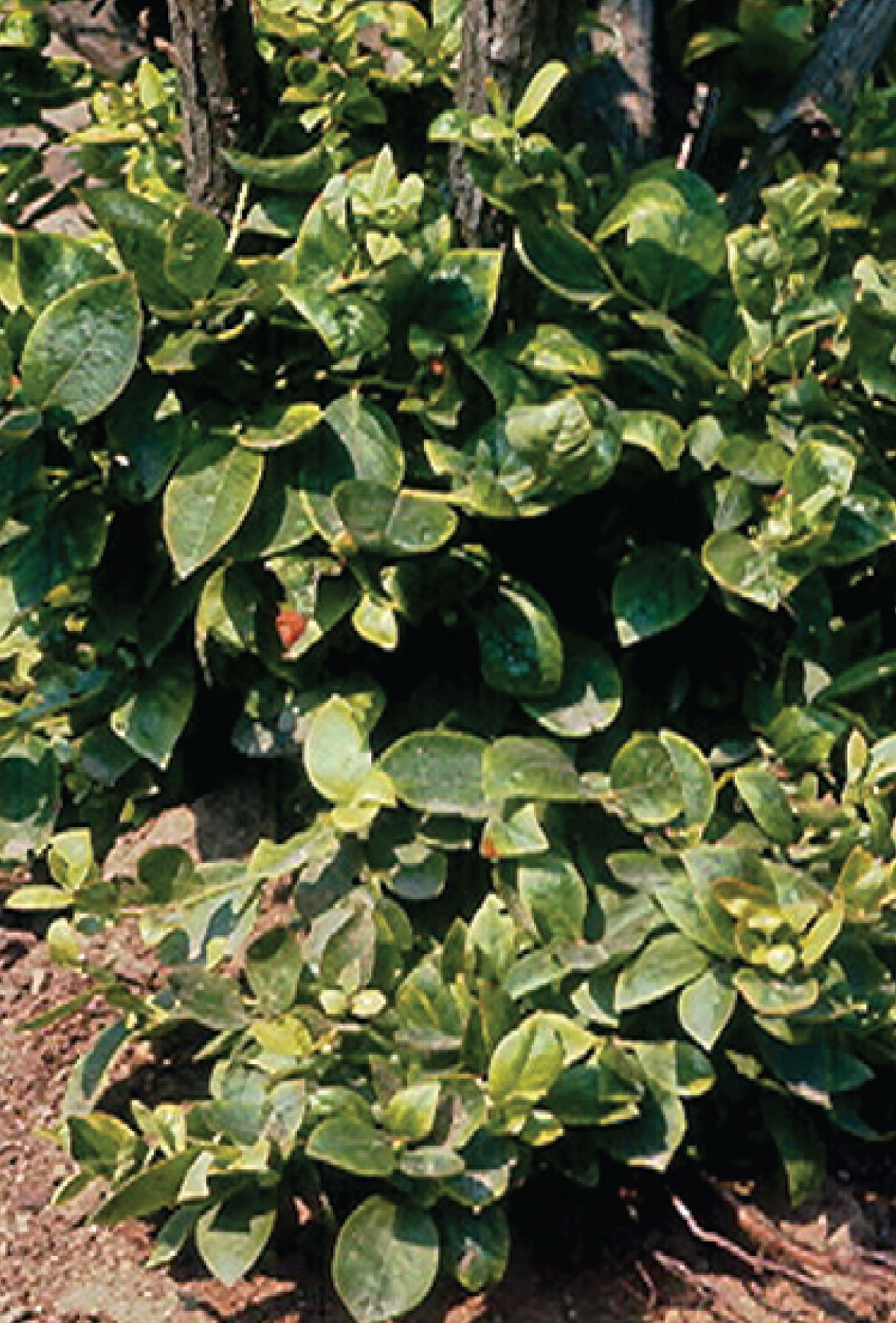
Necrotic Ringspot
(Tobacco ringspot virus – TRSV)
Damage: Symptoms vary among cultivars. Leaves may be small, misshapen, crinkled and have small necrotic spots, 2-5 mm in diameter. Young twigs may have small brown necrotic patches. Yield is reduced. Symptoms are similar to those of ToRSV.
Disease: TRSV is spread by dagger nematodes (Xiphinema spp.) from infected to healthy roots in the soil. It causes plant decline in Oregon and the Eastern US.
Tomato Ringspot
(Tomato ringspot virus – ToRSV)
Damage: Leaves are cupped and misshapen or elongated and have pale yellow or brown circular spots of 2-5 mm in diameter. Stems may have brown, circular spots of 2-5 mm in diameter. Some shoots may appear normal, others may have misshapen leaves. An infected bush can be completely defoliated.
Disease: ToRSV is spread by dagger nematodes (Xiphinema spp.) from infected to healthy roots in the soil. The virus spreads slowly, causing plant decline in expanding circular patches in the field. It is present in Washington, Oregon and Michigan. It has been detected in BC on raspberries but not on blueberries.
Weevils
Clay Coloured Weevil
(Otiorhynchus singularis)
 Clay Coloured WeevilCarolyn Teasdale, ES Cropconsult.
Green Immigrant Leaf Weevil
(Polydrusus sericeus)
 Green Immigrant Leaf WeevilCarolyn Teasdale, ES Cropconsult.
Strawberry Root Weevil
(Otiorhynchus ovatus)
 Strawberry Root WeevilJim Troubridge, AAFC
Rough Strawberry Root Weevil
 Rough Strawberry WeevilCarolyn Teasdale, ES Cropconsult.
(Otiorhynchus rugosostriatus)
Black Vine Weevil
(Otiorhynchus sulcatus)
 Black Vine WeevilCarolyn Teasdale, ES Cropconsult.
 Adult Black Vine WeevilJim Troubridge, AAFC
Obscure Weevil
(Sciopithes obscurus)
 Obscure WeevilCarolyn Teasdale, ES Cropconsult.
Damage: Larvae feed and girdle the roots and crown causing mature plants to decline. Young plants may be killed. Adult weevils feed on foliage resulting in ‘notching’, however, this does not usually affect the plant.
Insect: Adult weevils are wingless and have narrow snouts. They range in size from 5-12 mm, depending on species. Black vine weevil adults are the largest and can be up to 12 mm long. Rough strawberry root weevils are 8-10 mm long. Clay coloured and Obscure weevils are 7-9 mm long. The smallest is the Strawberry root weevil at 5-7 mm long. Each species is distinctly coloured. Green immigrant leaf weevil is shiny green and can fly.
Adult weevils climb the bushes to feed at night. During the day they rest near the soil surface and will play dead when disturbed. Clay coloured weevil adults chew buds, strip bark and girdle one year old wood from March to May. Leaf notching from June to September is normally caused by Black vine and Obscure weevil adults. Strawberry and Rough strawberry weevils tend to be more active in spring and fall, and remain protected in the soil during the hot summer months. Adult of Green immigrant leaf weevil make small feeding notches on newer leaves both high and low on the plant, and are active in fields during the day and evening. Larvae are up to 12 mm long, white with tan heads, and are found near the crown or roots of blueberry bushes. Larvae do not have legs, but are somewhat mobile in soil. Larvae hatch from July-September and spend the winter in the soil. Eggs are laid from spring to fall, with the peak occurring July-August.
 Weevil Damage on TwigCarolyn Teasdale, ES Cropconsult
 Weevil Damage on Bud.Carolyn Teasdale, ES Cropconsult
 Weevil Notching on Leaf.